
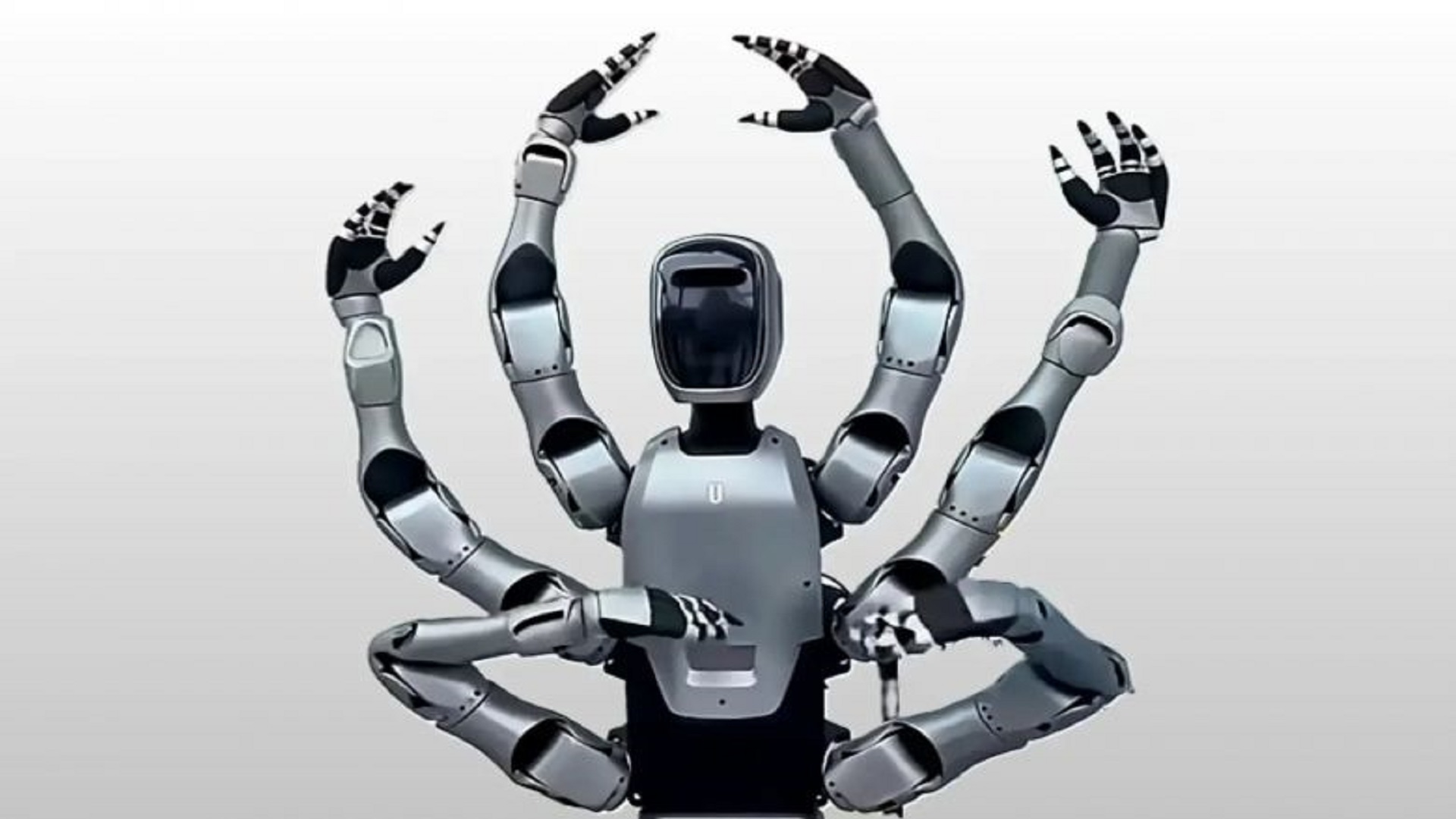
World's First Six-Armed Humanoid Robot Unveiled
A groundbreaking development in robotics has been announced with the unveiling of the world's first six-armed humanoid robot. This innovative machine, named "Six" by its creators, is designed to perform tasks that require manipulation with multiple limbs simultaneously, a capability previously unseen in humanoid robotics. The robot aims to enhance efficiency and dexterity in various applications, pushing the boundaries of what humanoid robots can achieve.
Design and Capabilities
The Six-armed humanoid robot features a unique design incorporating six articulated arms, allowing for unprecedented levels of dexterity and multi-tasking potential. This configuration enables the robot to grasp, manipulate, and interact with objects in ways that a standard two-armed robot cannot. The arms are designed to work in coordination, allowing for complex operations that might typically require multiple individuals or specialized equipment. While specific details on the exact weight and dimensions are not provided, the visual representation suggests a size comparable to a human.
Potential Applications and Future Implications
The development of Six opens up a range of potential applications across various industries. Its ability to handle multiple tasks concurrently could be invaluable in manufacturing, where it could assemble complex components or manage intricate production lines. In logistics, it could streamline the sorting and packaging of goods. Furthermore, its dexterity might find use in fields such as healthcare for assisting in surgical procedures or in disaster response scenarios for handling delicate equipment or debris. The creators believe this robotic innovation could significantly alter how complex manipulation tasks are performed in the future, leading to increased productivity and new possibilities for automation.
In summary, the introduction of the six-armed humanoid robot marks a significant advancement in the field of robotics. Its novel design with multiple arms offers enhanced manipulation capabilities, paving the way for its deployment in demanding industrial and potentially critical operational environments. This development is poised to redefine the scope of humanoid robot functionalities.