
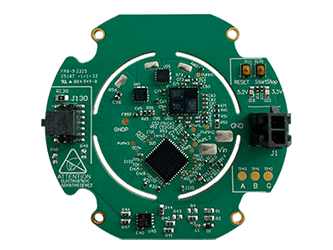
Design Constraints and Architectural Implications of Humanoid Robot Joints Explored
This news post details the challenges and considerations involved in designing joints for humanoid robots, as discussed in a recent article by EPC. The article highlights the intricate interplay between engineering constraints, material science, and the desired functionalities of these complex robotic components.
Mechanical and Electrical Design Challenges
The design of humanoid robot joints faces significant mechanical and electrical hurdles. These include achieving high torque density to enable powerful yet compact joint movements, managing heat dissipation from motors and electronics within confined spaces, and ensuring precise control over a wide range of motion. The need for robust and durable materials that can withstand repetitive stress and potential impacts is also a critical factor. Furthermore, integrating sensors for position, velocity, and force feedback adds another layer of complexity, requiring careful consideration of space, power, and data transmission.
Integration and System-Level Considerations
Beyond individual joint design, the article emphasizes the system-level implications for the overall architecture of humanoid robots. The efficient integration of numerous joints is paramount for creating a cohesive and functional robot. This involves managing the interconnectedness of joint movements, ensuring smooth and coordinated locomotion, and optimizing power distribution across all actuators. The article also touches upon the impact of joint design on the robot's overall form factor, weight distribution, and balance, all of which are crucial for stability and maneuverability in various environments.
In summary, the design of humanoid robot joints is a multifaceted engineering endeavor. It requires addressing significant mechanical and electrical constraints while simultaneously considering the broader architectural implications for the robot's performance and overall system integration.