
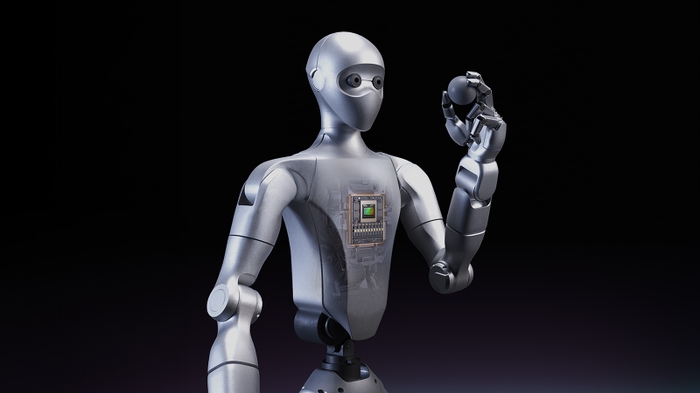
NVIDIA Unveils Open-Source Humanoid Robot Reference Design
NVIDIA has introduced an open-source humanoid robot reference design aimed at accelerating the development and deployment of autonomous robots. This initiative provides a foundation for researchers and developers to build and train sophisticated humanoid robots, with a focus on advancing AI for robotics.
Foundational Technology and Capabilities
The reference design is built upon NVIDIA's Jetson platform and Isaac ROS software, offering a robust framework for AI-powered robotic applications. It incorporates NVIDIA's Omniverse platform for digital twin simulation, enabling the creation of virtual environments for robot training and testing. The design supports the development of robots capable of performing complex tasks, such as manipulation and navigation, in diverse and unstructured environments. Key components include advanced perception, locomotion, and manipulation capabilities, powered by the latest AI algorithms.
Open-Source Approach and Industry Impact
By making the reference design open-source, NVIDIA intends to foster collaboration and innovation within the robotics community. This approach allows for broader access to cutting-edge technology, encouraging faster iteration and the exploration of new applications for humanoid robots across various industries. The goal is to democratize access to AI for robotics, empowering developers to create more capable and intelligent autonomous systems. The open-source nature of the design facilitates customization and adaptation to specific use cases, from industrial automation to scientific research.
In summary, NVIDIA has released an open-source humanoid robot reference design to speed up the creation of autonomous robots. This design leverages NVIDIA's Jetson and Isaac ROS platforms, along with Omniverse for simulation, to enable advanced AI capabilities. The open-source strategy aims to promote wider adoption and innovation in humanoid robotics development.