
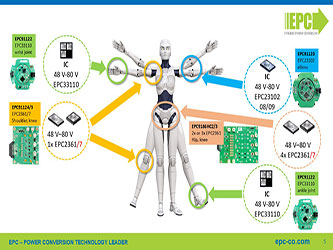
Humanoid Robotics Identified as a Power Electronics Challenge
The development of advanced humanoid robotics is intrinsically linked to overcoming significant challenges within the field of power electronics, according to an article published by EPC. The article posits that current limitations in power management are a primary barrier to the widespread deployment and enhanced capabilities of sophisticated humanoid robots.
Power Demands of Humanoid Systems
Humanoid robots, designed to mimic human form and function, present substantial power requirements. These systems necessitate efficient and compact power delivery to numerous actuators, sensors, and onboard processing units. The article highlights that the complex movements, dynamic balancing, and environmental interactions expected of these robots demand a robust and responsive power infrastructure. Traditional power solutions may not be sufficient to meet the high energy throughput and precise control required for advanced locomotion and manipulation.
Advances in Power Management Technology
The article suggests that progress in power electronics is crucial for unlocking the full potential of humanoid robotics. Innovations in areas such as high-frequency switching, efficient energy conversion, and advanced thermal management are seen as key enablers. By developing smaller, lighter, and more powerful power conversion and distribution systems, engineers can improve the performance, range, and overall utility of humanoid robots. This includes enabling longer operational times and more sophisticated functionalities.
In conclusion, the article emphasizes that the advancement of humanoid robotics is not solely an issue of mechanical engineering or artificial intelligence, but a fundamental power electronics problem. Addressing the power demands and developing more efficient power management solutions are critical steps toward realizing the widespread use and increased sophistication of humanoid robotic systems.