
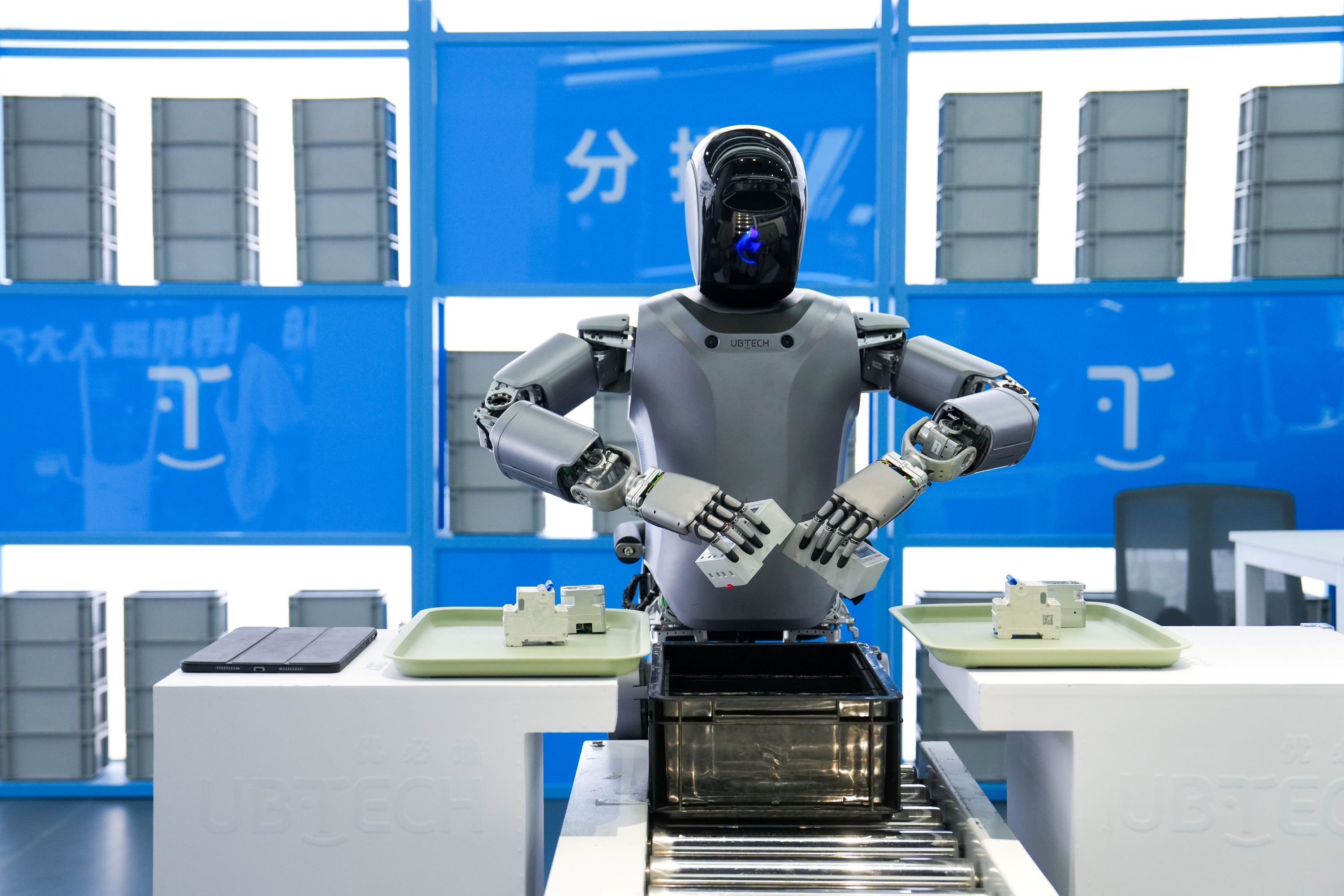
UBTech Humanoid Robots Poised for Future Manufacturing
A recent analysis by MERICS examines the potential impact of UBTech's humanoid robots on the future of manufacturing. The report highlights the company's ambition to integrate its advanced robotics into industrial settings, suggesting a shift towards more adaptable and versatile production lines.
UBTech's Robotics Development and Goals
UBTech Robotics, a Chinese company, has been developing humanoid robots with a focus on their potential application in various sectors, including manufacturing. The company aims to overcome limitations of traditional industrial robots by offering machines that can perform more complex and adaptable tasks. These robots are designed to be capable of a wider range of movements and interactions compared to current specialized automation. The underlying goal is to enhance efficiency and flexibility within manufacturing processes, potentially enabling shorter production cycles and easier reconfiguration of assembly lines.
Implications for Manufacturing Automation
The introduction of UBTech's humanoid robots could signify a new phase in manufacturing automation. Unlike highly specialized robots that are programmed for specific tasks, humanoid robots possess the potential for greater versatility. This could allow them to handle a broader spectrum of jobs, including those that require dexterity and the ability to navigate dynamic environments. The MERICS analysis suggests that if these robots prove effective in real-world industrial scenarios, they could contribute to increased automation in sectors that have traditionally relied more on human labor due to the complexity of tasks. This development may lead to more integrated human-robot collaboration on factory floors.
In summary, UBTech is developing humanoid robots with the stated aim of integrating them into future manufacturing. These robots are designed for enhanced versatility and adaptability, potentially offering a new avenue for automation in industrial settings. The MERICS analysis explores the implications of this development for the evolving landscape of manufacturing.